ORIGINAL
Validation of the Individual Entrepreneurial Intent Scale (IEIS) among Peruvian university students
Tabata A. Agama-Huaman1* *
1Unidad de Educación, Escuela de Posgrado, Universidad Peruana Unión. Lima, Perú.
Citation
Agama-Huaman, T. A. (2023). Validation of the Individual Entrepreneurial Intent Scale (IEIS) among Peruvian university students. Multidisciplinary Research in Sciences, Technology and Humanities, 1, 5. https://doi.org/10.69653/msth20235
Received: 03-06-2024
Accepted: 19-12-2023
Published: 20-12-2023
*Correspondence:
Escuela de Posgrado, Universidad Peruana Unión, Km 19, Carretera Central, Lima 15033, Lima, Peru.
Abstract
Entrepreneurship plays a pivotal role in economic growth and innovation, with entrepreneurial intent being a key predictor of entrepreneurial behavior. However, accurately measuring this intent is vital for predicting and promoting entrepreneurship. This study aimed to assess the psychometric properties and invariance of the Individual Entrepreneurial Intent Scale (IEIS) among Peruvian university students. A methodological research design was employed with a sample of 390 management university students. The IEIS, a 6-item scale that measures entrepreneurial intent, was translated into Spanish and culturally adapted for use in the Peruvian context. Results from the confirmatory factor analysis showed a good fit of the IEIS’s unidimensional model, and the scale proved to be reliably consistent. Additionally, evidence of the IEIS’s invariance by gender was found, indicating that the scale consistently measures entrepreneurial intent in both men and women. In conclusion, this study offers evidence of the validity and reliability of the IEIS in the Peruvian context, suggesting that this scale could be a useful tool for measuring entrepreneurial intent among Peruvian university students.
Keywords:
Entrepreneurship, Entrepreneurial Intent, University Students, Validation.
Introduction
Entrepreneurship is a key driver of economic growth and innovation, and its study has gained relevance in recent decades (Braunerhjelm, 2010; Toma et al., 2014). Specifically, entrepreneurial intention, defined as a person’s mental disposition to start a new business (Anjum et al., 2020; Brás et al., 2023) has been identified as a crucial predictor of entrepreneurial behavior (Kong et al., 2020; Singh & Onahring, 2019). Consequently, the phenomenon of entrepreneurship, particularly entrepreneurial intention, has garnered the attention of academics and professionals worldwide due to its impact on the economy and society (Krueger et al., 2000; Nowiński & Haddoud, 2019). Entrepreneurial intention refers to an individual’s conscious willingness to start a new venture (Elnadi & Gheith, 2021; Kong et al., 2020) and accurate measurement of this intention is essential for predicting and fostering entrepreneurship (Shahzad et al., 2021).
Entrepreneurial intention has been identified as a significant predictor of entrepreneurial activity (Lopes et al., 2023)subjective norms positively impact the attitude to behavior and perceived behavioral control. ‘Closer’ valuation (i.e., of family, friends, etc. In the Peruvian context, entrepreneurship is an increasingly relevant activity, especially among university students (Cordova & Cancino, 2020; Martínez-Gregorio et al., 2021). University students represent a particularly interesting population as they are about to enter the labor market and have significant potential to contribute to the entrepreneurial ecosystem (Dao et al., 2021; Hua et al., 2022). Peruvian university students, in particular, constitute a demographic of interest due to their potential role in fostering economic growth and development (Cano Correa et al., 2017; Valero & Van Reenen, 2019). Despite the growing popularity of entrepreneurship in Peru, there is a scarcity of studies examining entrepreneurial intention in this context (Torres et al., 2017) based on Ajzen’s model of planned behavior (1991. According to Alam et al. (2019)which is considered by academic researchers as under-researched area. It further examines the moderating role of entrepreneurial motivation between intention and behaviour (action, intention is the stage closest to action, and therefore, its precise measurement is crucial for effectively predicting and supporting entrepreneurship (Li et al., 2020)
Various tools and scales have been developed to measure entrepreneurial intention in the educational context. Among the most notable is the Entrepreneurial Intention Questionnaire (EIQ), which consists of six items and measures entrepreneurial intention through self-efficacy in final-year university students (Liñán & Chen, 2009), This scale has been validated in several cultural contexts, including Spain and China. The Entrepreneurial Potential Scale (EPS) by Kolvereid (1996) is an 11-item scale that measures entrepreneurial intention through preference for entrepreneurship over salaried employment. The Entrepreneurial Attitude Orientation Scale (EAOS) by Robinson, Stimpson, Huefner, and Hunt (1991) is a 75-item scale that measures four dimensions of attitude towards entrepreneurship: personal achievement, independence, innovation, and risk. Although the length of the EAOS can be a challenge in some research contexts. The Individual Entrepreneurial Intent Scale (IEIS) is a 6-item scale developed by Thompson (2009) that measures entrepreneurial intention through self-efficacy, attraction to entrepreneurship, and perceived feasibility and desirability. However, the validity of a psychometric instrument is not universal and can vary according to cultural and demographic context (Davidov et al., 2014)
Although the IEIS has demonstrated good validity and reliability in various contexts, its validity in the Peruvian context has not been thoroughly investigated. Compared to these scales, the IEIS has several advantages. Firstly, its moderate length makes it suitable for research contexts where time may be limited. Secondly, its focus on self-efficacy, attraction, and perception of feasibility and desirability aligns with the theory of planned behavior (Ajzen, 1991)1985, 1987, one of the most influential theories in entrepreneurial intention research.
Additionally, measurement invariance holds that a scale should measure the same construct in the same way across different groups (Vandenberg & Lance, 2016)
In the context of entrepreneurship, this implies that a scale like the IEIS should measure entrepreneurial intention consistently, regardless of the respondents’ gender, culture, or demographics. In the university context, measuring entrepreneurial intention is especially relevant. University students represent a population with high entrepreneurial potential, and accurately measuring their entrepreneurial intention can provide valuable insights for designing entrepreneurship education and training programs (Fayolle et al., 2006). Therefore, assessing the invariance of the IEIS among Peruvian university students provides valuable information on the applicability of the scale in this specific group and enriches the existing literature. Despite its importance, the gender invariance of the Individual Entrepreneurial Intent Scale (IEIS) among Peruvian university students has not yet been thoroughly investigated.
However, despite these advantages, the validity and reliability of the IEIS in the Peruvian context have not yet been thoroughly investigated. Given the importance of entrepreneurship in Peru and the growing relevance of university students as an entrepreneurial population, it is crucial to fill this gap in the literature. The objective of this research is to evaluate the psychometric properties and invariance of the IEIS scale among Peruvian university students.
Method
Design and Participants
The research design is methodological and instrumental. Data collection was conducted using non-probabilistic sampling. The sample size was analyzed using the effect size through an electronic calculator (Soper, 2023), which considers the number of observed and latent variables in the model, the anticipated effect size (λ = 0.2), the desired statistical significance (α = 0.05), and the statistical power level (1 - β = 0.80). A minimum recommended sample of 200 participants was considered. The study included 390 university students majoring in business administration, with ages ranging from 19 to 47 (M = 23.75, SD = 6.65). Regarding gender, 57.4% of the participants were female, while 42.6% were male. The majority of participants were from the jungle region (61.3%). In terms of monthly family income, the most frequent range was “Between 1000 and 1900 soles” (30.5%). Additionally, 65.6% had entrepreneurial parents, 67.4% were employed, 52.3% did not live independently, and 63.8% did not have a family business (Table 1).
|
Table 1. Sociodemographic Information |
|||
|
Characteristic |
n |
% |
|
|
Gender |
Female |
224 |
57.4 |
|
Male |
166 |
42.6 |
|
|
Region |
Coast |
89 |
22.8 |
|
Jungle |
239 |
61.3 |
|
|
Highlands |
62 |
15.9 |
|
|
Monthly Family Income |
Between 1000 and 1900 soles |
119 |
30.5 |
|
Between 2000 and 2900 soles |
74 |
19.0 |
|
|
Between 3000 and 4900 soles |
43 |
11.0 |
|
|
More than 5000 soles |
45 |
11.5 |
|
|
Less than 1000 soles |
109 |
27.9 |
|
|
Entrepreneurial Parents |
No |
134 |
34.4 |
|
Yes |
256 |
65.6 |
|
|
Employment Status |
No |
127 |
32.6 |
|
Yes |
263 |
67.4 |
|
|
Residential Independence |
No |
204 |
52.3 |
|
Yes |
186 |
47.7 |
|
|
Family Business |
No |
249 |
63.8 |
|
Yes |
141 |
36.2 |
|
Instrument
Individual Entrepreneurial Intention: The English version of the Individual Entrepreneurial Intent Scale (IEIS) was used, consisting of 6 items, with items 2, 4, and 5 being reverse-scored. The scale uses an interval measure ranging from 1 to 6 (1 = very false, 2 = false, 3 = slightly false, 4 = slightly true, 5 = true, 6 = very true) and demonstrated adequate internal consistency with a Cronbach’s alpha coefficient of 0.89 (Thompson, 2009).
The translation from English to Spanish of the Individual Entrepreneurial Intent Scale was conducted following cultural adaptation procedures (Beaton et al., 2000).
· Initially, two bilingual Spanish-speaking individuals with experience in translating instruments performed a translation into Spanish. The translated versions were compared in a joint meeting with one of the co-authors, who also had experience in instrument translation, resulting in an initial Spanish version of the instrument.
· Subsequently, the Spanish version was back-translated into English by two professional translators in the United States, who were Spanish speakers but unfamiliar with the IEIS.
· The researchers reviewed both the Spanish and back-translated English versions, and a preliminary version of the IEIS was developed.
· The preliminary version was subjected to a focus group consisting of 9 university students majoring in business administration, to assess the instrument’s comprehension and readability. No significant comprehension issues were identified during this stage, so no linguistic changes were necessary for the final Spanish version, which was named the Peruvian Entrepreneurial Intent Scale (IEIS-P) (see Appendix 1).
· The updated version of the instrument was sent to the original authors, along with the back-translated English versions, for review. The original authors did not suggest any changes, so it was decided to use the IEIS-P version with the full sample.
Procedure
The research protocol received approval from the Ethics Committee of a Peruvian university, under reference number CE-DGI-030. Contact was established with the administrators of two private Peruvian universities. To identify potential issues with the wording and comprehension of the items, a pilot test was conducted via a Zoom meeting. Informed consent forms were subsequently sent to the students through Google Forms, WhatsApp groups, and emails. Participants were assured of their right to withdraw from the study at any time if they wished. Throughout the study, ethical standards set forth in the Declaration of Helsinki were followed, which include the protection of privacy and confidentiality of personal information, as well as minimizing any impact on the physical, mental, and social health of the participants.
Data Analysis
A descriptive analysis of the scale was conducted using various statistics, including mean, standard deviation, skewness, kurtosis, and corrected item-total correlation. Values for skewness (g1) and kurtosis (g2) were considered acceptable if they fell within ± 1.5 (Pérez & Medrano, 2010). Additionally, corrected item-total correlation analysis was used to eliminate items with an r(i-tc) value less than or equal to 0.2 (Kline, 2016)
To confirm the unidimensional structure proposed by Thompson (2009), a confirmatory factor analysis (CFA) was performed using the MLR estimator, which is suitable for numerical variables and robust against deviations from normality in inference (Muthen & Muthen, 2017). Several fit indices were used, including the confirmatory fit index (CFI) and the Tucker-Lewis index (TLI), with values of 0.90 or higher considered indicative of good fit (Schumacker & Lomax, 2016), Additionally, the root mean square error of approximation (RMSEA) and the standardized root mean square residual (SRMR) were used, with values of 0.08 or lower considered indicative of good fit (Kline, 2016). Factor loadings (λ) greater than 0.50 were also considered adequate. In terms of reliability, Cronbach’s alpha and McDonald’s omega coefficients were calculated (McDonald, 1999). High values (> 0.70) were expected to indicate adequate reliability (Raykov & Hancock, 2005).
To evaluate the consistency of the factors based on the participants’ gender, a series of increasingly strict hierarchical variance models were used. Configural invariance (baseline model) was first assessed, followed by metric invariance (equality of factor loadings), scalar invariance (equality of factor loadings and intercepts), and finally, strict invariance (equality of factor loadings, intercepts, and residuals). The ΔCFI statistic test was used to compare the models, with values less than 0.01 indicating model consistency across groups (Chen, 2007; Finch & French, 2018).
The statistical analysis was performed using the open-source software R 4.1.1 (R Foundation for Statistical Computing, Vienna, Austria; http://www.R-project.org).
Resultados
Descriptive Statistics of Work Performance Items
As shown in Table 2, the highest mean is found in item 1 (5.23), while the lowest mean is in item 4 (3.58). Regarding skewness (g1) and kurtosis (g2), all items are within the acceptable range of ± 1.5, except for item 1. The item-total correlations (r.cor) for all items exceed the acceptable threshold of 0.30, indicating a good relationship between the items and the total scale. Therefore, no items need to be removed. Additionally, the internal consistency of the scale is evaluated using Cronbach’s alpha coefficient, indicating acceptable internal consistency.
|
Table 2. Descriptive Statistics and Reliability |
||||||
|
Item |
M |
sd |
g1 |
g2 |
r.cor |
α |
|
1. Tengo la intención de establecer una empresa en el futuro. |
5.23 |
1.05 |
-1.76 |
3.07 |
0.61 |
0.79 |
|
2. Nunca busco oportunidades para comenzar un negocio (R). |
4 |
1.66 |
-0.37 |
-1.24 |
0.52 |
0.79 |
|
3. Estoy ahorrando dinero para comenzar un negocio. |
4.28 |
1.36 |
-0.86 |
-0.05 |
0.55 |
0.79 |
|
4. No leo libros sobre cómo establecer una empresa (R). |
3.58 |
1.43 |
-0.04 |
-0.97 |
0.56 |
0.79 |
|
5. No tengo planes de lanzar mi propio negocio (R). |
4.17 |
1.61 |
-0.59 |
-0.95 |
0.51 |
0.79 |
|
6. Paso tiempo aprendiendo sobre cómo iniciar una empresa. |
4.34 |
1.36 |
-0.92 |
-0.02 |
0.56 |
0.79 |
|
Note. M = Mean, SD = Standard Deviation, g1 = Skewness, g2 = Kurtosis, R= Inverse items |
||||||
Confirmatory Factor Analysis and Reliability
The CFA was conducted hypothesizing the unifactorial model proposed by Thompson (2009). The goodness-of-fit indices for the total sample were: χ2 = 19.530, df = 5, p = 0.002, CFI = 0.97, TLI = 0.92, RMSEA = 0.08 (90% CI 0.05 - 0.12), SRMR = 0.03, indicating an adequate fit. All factor loadings (λ) were greater than 0.50. Internal consistency was satisfactory, with Cronbach’s alpha coefficients (α = 0.75) and McDonald’s Omega (ꞷ = 0.85).
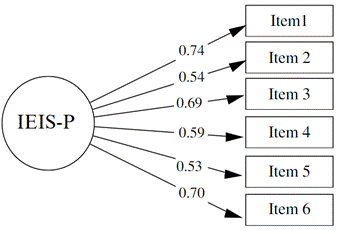
Figure 1. CFA of the Unifactorial IEIS-P
Gender Invariance
Gender invariance was assessed, and the results indicate that the scale is invariant across all evaluated levels. Firstly, configurational invariance was confirmed, indicating that the factorial structure of the scale is the same for both gender groups. This is evidenced by a comparative fit index (CFI) of 0.962, which exceeds the recommended threshold of 0.90 for good fit (Hu & Bentler, 1999). Secondly, metric invariance was confirmed, indicating that the factor loadings are equal across both gender groups. Although the CFI slightly decreased to 0.955, the difference in CFI (ΔCFI) was 0.007, which is below the threshold of 0.01 suggested by Chen (2007) to confirm invariance. Thirdly, scalar invariance was confirmed, indicating that the factor loadings and intercepts are equal across both gender groups. Surprisingly, the CFI slightly increased to 0.956, and the ΔCFI was -0.001, which also confirms invariance. Finally, strict invariance was confirmed, indicating that the factor loadings, intercepts, and residuals are equal across both gender groups. The CFI slightly increased to 0.958, and the ΔCFI was -0.002, further confirming invariance. In summary, these results indicate that the IEIS-P scale is invariant across gender groups at all evaluated levels.
|
Table 4. Factorial Invariance by Gender |
||||||||
|
Invariance |
χ2 |
df |
RMSEA |
p |
SRMR |
TLI |
CFI |
∆CFI |
|
M1 |
31.119 |
10 |
0.101 |
<.01 |
0.101 |
0.887 |
0.962 |
|
|
M2 |
40.205 |
15 |
0.09 |
<.01 |
0.09 |
0.91 |
0.955 |
0.007 |
|
M3 |
44.759 |
20 |
0.078 |
<.01 |
0.078 |
0.934 |
0.956 |
-0.001 |
|
M4 |
49.59 |
26 |
0.066 |
<.01 |
0.066 |
0.951 |
0.958 |
-0.002 |
|
Note. M1 = Configural; M2 = Metric; M3 = Scalar; M4 = Strict; χ2: chi-square; df = degrees of freedom; RMSEA = Root Mean Square Error of Approximation; SRMR = Standardized Root Mean-Square Residual; TLI = Tucker-Lewis Index; CFI = Comparative Fit Index; ΔCFI = Comparative Fit Index difference. |
||||||||
Discussion
This study aimed to evaluate the psychometric properties and invariance of the Individual Entrepreneurial Intent Scale (IEIS) in a sample of Peruvian university students. The results support the validity and reliability of the IEIS in this context, addressing a significant gap in the literature on entrepreneurial intention in Peru.
The confirmatory factor analysis results support the unidimensional structure of the IEIS proposed by Thompson (2009). This finding is consistent with previous studies that have validated the IEIS in other contexts (Kolvereid, 1996; Liñán & Chen, 2009). However, it is important to note that this is the first study to confirm the unidimensional structure of the IEIS in the Peruvian context. This finding is relevant as it suggests that the IEIS can be a useful tool for measuring entrepreneurial intention among Peruvian university students, a demographic group of interest due to their potential to contribute to the entrepreneurial ecosystem (Lüthje & Franke, 2003).
The results also indicate that the IEIS has good reliability in the studied sample, with a Cronbach’s alpha coefficient of 0.75 and a McDonald’s Omega coefficient of 0.85. These values are comparable to those reported in previous studies that have used the IEIS in other contexts (Kolvereid, 1996; Liñán & Chen, 2009). This finding suggests that the IEIS is a reliable measure of entrepreneurial intention among Peruvian university students.
Additionally, the results indicate that the IEIS is invariant by gender in the studied sample. This means that the scale measures the same construct in the same way for both men and women. This finding is relevant as it suggests that the IEIS can be used to compare entrepreneurial intention between men and women in the Peruvian context. This finding is consistent with previous studies that have found gender invariance in other entrepreneurial intention scales (Kolvereid, 1996; Liñán & Chen, 2009). However, it is important to highlight that this is the first study to confirm the gender invariance of the IEIS in the Peruvian context.
In terms of applicability, the results of this study suggest that the IEIS can be a useful tool for measuring entrepreneurial intention among Peruvian university students. Given that entrepreneurial intention is an important predictor of entrepreneurial activity (Kolvereid, 1996; Liñán & Chen, 2009), the IEIS can be used to identify students with high entrepreneurial potential and to design entrepreneurship education and training programs that meet their needs and aspirations. Furthermore, since the IEIS is invariant by gender, the scale can be used to compare entrepreneurial intention between men and women and to investigate potential gender differences in entrepreneurial intention.
Implications
The findings of this study have several important implications. The confirmation of the validity and reliability of the IEIS in the Peruvian context suggests that this scale can be a useful tool for measuring entrepreneurial intention among Peruvian university students. This is particularly relevant for education and career guidance professionals who can use the IEIS to identify students with high entrepreneurial intention and provide them with the necessary support and resources to foster their entrepreneurial development. Moreover, the results of this study can inform the design of entrepreneurship education policies and programs in Peru. For example, policymakers can use the IEIS to assess the effectiveness of entrepreneurship education programs and make adjustments as needed. Additionally, the confirmation of gender invariance of the IEIS suggests that this scale can be used to assess entrepreneurial intention in both men and women equally, which can inform the design of policies and programs that promote gender equality in entrepreneurship. This study also contributes to the literature on entrepreneurial intention by providing evidence of the validity and reliability of the IEIS in a new cultural and demographic context. This enriches our understanding of entrepreneurial intention and its measurement and provides a solid foundation for future research in this field.
Limitations
Despite the significant findings and contributions of this study, it is important to acknowledge its limitations. Firstly, the study was based on a sample of Peruvian university students majoring in business administration, which limits the generalizability of the results to other populations. Although university students are an important demographic group for studying entrepreneurial intention, the results may vary in other populations, such as practicing professionals, students from other disciplines, or individuals outside the university setting. Future research could address this limitation by replicating the study in different populations and contexts. Secondly, the study used a cross-sectional design, which limits our ability to make causal inferences or examine changes in entrepreneurial intention over time. Future research could address this limitation by using longitudinal or experimental designs that allow for the examination of the evolution of entrepreneurial intention and the factors that influence it over time. Thirdly, although this study confirmed the gender invariance of the IEIS, it did not examine the invariance of this scale in other demographic groups, such as different age groups or socioeconomic levels. Future research could address this limitation by investigating the invariance of the IEIS in different demographic groups.
Conclusion
This study provides evidence of the validity and reliability of the Individual Entrepreneurial Intent Scale (IEIS) in a sample of Peruvian university students. The results suggest that the IEIS can be a useful tool for measuring entrepreneurial intention in this demographic group. It is recommended that future studies confirm these findings in other contexts and populations.
References
Ajzen, I. (1991). The theory of planned behavior. Organizational Behavior and Human Decision Processes, 50(2), 179–211. https://doi.org/10.1016/0749-5978(91)90020-T
Alam, M. Z., Kousar, S., & Rehman, C. A. (2019). Role of entrepreneurial motivation on entrepreneurial intentions and behaviour: theory of planned behaviour extension on engineering students in Pakistan. Journal of Global Entrepreneurship Research, 9(1). https://doi.org/10.1186/s40497-019-0175-1
Anjum, T., Farrukh, M., Heidler, P., & Tautiva, J. A. D. (2020). Entrepreneurial Intention: Creativity, Entrepreneurship, and University Support. Journal of Open Innovation: Technology, Market, and Complexity 2021, Vol. 7, Page 11, 7(1), 11. https://doi.org/10.3390/JOITMC7010011
Beaton, D. E., Bombardier, C., Guillemin, F., & Ferraz, M. B. (2000). Guidelines for the process of cross-cultural adaptation of self-report measures. Spine, 25(24), 3186–3191. https://doi.org/10.1097/00007632-200012150-00014
Brás, G. R., Daniel, A., & Fernandes, C. (2023). The effect of proximal personality traits on entrepreneurial intention among higher education students. International Journal of Innovation Science. https://doi.org/10.1108/IJIS-10-2022-0198
Braunerhjelm, P. (2010). Entrepreneurship, innovation and economic growth: Past experiences, current knowledge and policy implications. Working Papers Series from Swedish Entrepreneurship Forum, 2(1).
Cano Correa, A. M., Quiroz Velasco, M. T., & Nájar Ortega, R. (2017). Jóvenes universitarios en Lima: Política, medios y participación- College Students in Lima: Politics, Media and Participation. Comunicar: Revista Científica de Educomunicación.
Chen, F. F. (2007). Sensitivity of Goodness of Fit Indexes to Lack of Measurement Invariance. Structural Equation Modeling: A Multidisciplinary Journal, 14(3), 464–504. https://doi.org/10.1080/10705510701301834
Cordova, M., & Cancino, C. A. (2020). Constraints and opportunities for entrepreneurship in Peru and Chile: A discussion about institutions and social networks in Latin America. Revista Virtual Universidad Católica Del Norte, 60. https://doi.org/10.35575/rvucn.n60a2
Dao, T. K., Bui, A. T., Doan, T. T. T., Dao, N. T., Le, H. H., & Le, T. T. H. (2021). Impact of academic majors on entrepreneurial intentions of Vietnamese students: An extension of the theory of planned behavior. Heliyon, 7(3). https://doi.org/10.1016/j.heliyon.2021.e06381
Davidov, E., Meuleman, B., Cieciuch, J., Schmidt, P., & Billiet, J. (2014). Measurement equivalence in cross-national research. In Annual Review of Sociology (Vol. 40). https://doi.org/10.1146/annurev-soc-071913-043137
Elnadi, M., & Gheith, M. H. (2021). Entrepreneurial ecosystem, entrepreneurial self-efficacy, and entrepreneurial intention in higher education: Evidence from Saudi Arabia. International Journal of Management Education, 19(1). https://doi.org/10.1016/j.ijme.2021.100458
Fayolle, A., Gailly, B., & Lassas-Clerc, N. (2006). Assessing the impact of entrepreneurship education programmes: A new methodology. Journal of European Industrial Training, 30(9). https://doi.org/10.1108/03090590610715022
Finch, W. H., & French, B. F. (2018). A Simulation Investigation of the Performance of Invariance Assessment Using Equivalence Testing Procedures. Structural Equation Modeling, 25(5). https://doi.org/10.1080/10705511.2018.1431781
Hu, L., & Bentler, P. M. (1999). Cutoff criteria for fit indexes in covariance structure analysis: Conventional criteria versus new alternatives. Structural Equation Modeling: A Multidisciplinary Journal, 6(1), 1–55. https://doi.org/10.1080/10705519909540118
Hua, J., Zheng, K., & Fan, S. (2022). The impact of entrepreneurial activities and college students’ entrepreneurial abilities in higher education—A meta-analytic path. In Frontiers in Psychology (Vol. 13). https://doi.org/10.3389/fpsyg.2022.843978
Kline, R. B. (2016). Principles and practice of structural equation modeling (Cuarta Ed.). Guilford Press.
Kolvereid, L. (1996). Prediction of Employment Status Choice Intentions: Entrepreneurship Theory and Practice, 21(1), 47–58. https://doi.org/10.1177/104225879602100104
Kong, F., Zhao, L., & Tsai, C. H. (2020). The Relationship Between Entrepreneurial Intention and Action: The Effects of Fear of Failure and Role Model. Frontiers in Psychology, 11. https://doi.org/10.3389/fpsyg.2020.00229
Krueger, N. F. J., Reilly, M. D., & Carsrud, A. L. (2000). Competing models of entrepreneurial intentions . Journal of Business Venturing, 15(5–6), 411–432.
Li, C., Murad, M., Shahzad, F., Khan, M. A. S., Ashraf, S. F., & Dogbe, C. S. K. (2020). Entrepreneurial Passion to Entrepreneurial Behavior: Role of Entrepreneurial Alertness, Entrepreneurial Self-Efficacy and Proactive Personality. Frontiers in Psychology, 11. https://doi.org/10.3389/fpsyg.2020.01611
Liñán, F., & Chen, Y. W. (2009). Development and Cross–Cultural Application of a Specific Instrument to Measure Entrepreneurial Intentions: Https://Doi.Org/10.1111/j.1540-6520.2009.00318.X, 33(3), 593–617. https://doi.org/10.1111/J.1540-6520.2009.00318.X
Lopes, J. M., Laurett, R., Ferreira, J. J., Silveira, P., Oliveira, J., & Farinha, L. (2023). Modeling the predictors of students’ entrepreneurial intentions: The case of a peripheral European region. Industry and Higher Education, 37(2). https://doi.org/10.1177/09504222221117055
Lüthje, C., & Franke, N. (2003). The “making” of an entrepreneur: Testing a model of entrepreneurial intent among engineering students at MIT. R and D Management, 33(2), 135–147. https://doi.org/10.1111/1467-9310.00288
Martínez-Gregorio, S., Badenes-Ribera, L., & Oliver, A. (2021). Effect of entrepreneurship education on entrepreneurship intention and related outcomes in educational contexts: a meta-analysis. International Journal of Management Education, 19(3). https://doi.org/10.1016/j.ijme.2021.100545
McDonald, R. P. (1999). Test Theory: A United Treatment. Lawrence Erlbaum.
Muthen, L., & Muthen, B. (2017). MPlus user’ guide (8th ed.).
Nowiński, W., & Haddoud, M. Y. (2019). The role of inspiring role models in enhancing entrepreneurial intention. Journal of Business Research, 96. https://doi.org/10.1016/j.jbusres.2018.11.005
Pérez, E. R., & Medrano, L. (2010). Análisis factorial exploratorio : Bases conceptuales y metodológicas. Revista Argentina de Ciencias Del Comportamiento, 2(1), 58–66.
Raykov, T., & Hancock, G. R. (2005). Examining change in maximal reliability for multiple-component measuring instruments. British Journal of Mathematical and Statistical Psychology, 58(1), 65–82. https://doi.org/10.1348/000711005X38753
Robinson, P. B., Stimpson, D. V., Huefner, J. C., & Hunt, H. K. (1991). An Attitude Approach to the Prediction of Entrepreneurship. Entrepreneurship Theory and Practice, 15(4). https://doi.org/10.1177/104225879101500405
Schumacker, R. E., & Lomax, R. G. (2016). A Beginner´s Guide to Structural Equation Modeling (4th ed.). Taylor & Francis.
Shahzad, M. F., Khan, K. I., Saleem, S., & Rashid, T. (2021). What factors affect the entrepreneurial intention to start-ups? The role of entrepreneurial skills, propensity to take risks, and innovativeness in open business models. Journal of Open Innovation: Technology, Market, and Complexity, 7(3). https://doi.org/10.3390/JOITMC7030173
Singh, K. D., & Onahring, B. D. (2019). Entrepreneurial intention, job satisfaction and organisation commitment - construct of a research model through literature review. Journal of Global Entrepreneurship Research, 9(1). https://doi.org/10.1186/s40497-018-0134-2
Soper, D. (2023). A-priori Sample Size Calculator for structural equation models. Software.
Thompson, E. R. (2009). Individual Entrepreneurial Intent: Construct Clarification and Development of an Internationally Reliable Metric. Https://Doi.Org/10.1111/j.1540-6520.2009.00321.X, 33(3), 669–694. https://doi.org/10.1111/J.1540-6520.2009.00321.X
Toma, S.-G., Grigore, A.-M., & Marinescu, P. (2014). Economic Development and Entrepreneurship. Procedia Economics and Finance, 8. https://doi.org/10.1016/s2212-5671(14)00111-7
Torres, F. C., Méndez, J. C. E., Barreto, K. S., Chavarría, A. P., Machuca, K. J., & Guerrero, J. A. O. (2017). Exploring entrepreneurial intentions in Latin American university students. International Journal of Psychological Research, 10(2). https://doi.org/10.21500/20112084.2794
Valero, A., & Van Reenen, J. (2019). The economic impact of universities: Evidence from across the globe. Economics of Education Review, 68. https://doi.org/10.1016/j.econedurev.2018.09.001
Vandenberg, R. J., & Lance, C. E. (2016). A Review and Synthesis of the Measurement Invariance Literature: Suggestions, Practices, and Recommendations for Organizational Research: Https://Doi.Org/10.1177/109442810031002, 3(1), 4–69. https://doi.org/10.1177/109442810031002